

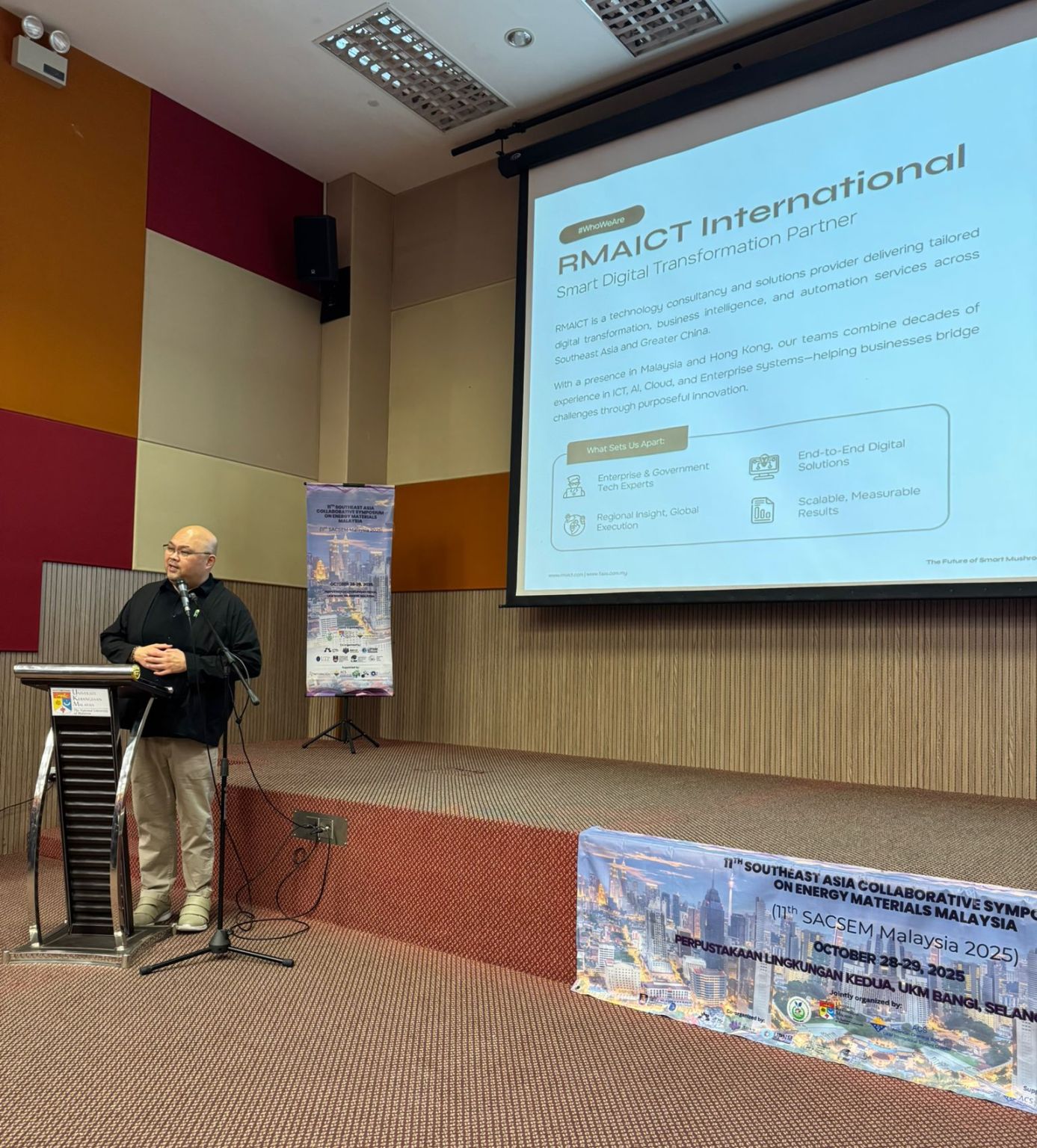
In October 2025, RMAICT participated in the 11th Southeast Asia Collaborative Symposium on Energy Materials (SACSEM 2025), held at Universiti Kebangsaan Malaysia (UKM). The symposium brought together researchers, academics and industry practitioners from across the region to exchange knowledge on sustainable energy, advanced materials and emerging technologies.
For RMAICT, the event provided an opportunity to share perspectives on how smart farming, artificial intelligence (AI), nanotechnology and renewable energy solutions could work together to support more resilient and sustainable agricultural systems.
Connecting smart farming with energy materials
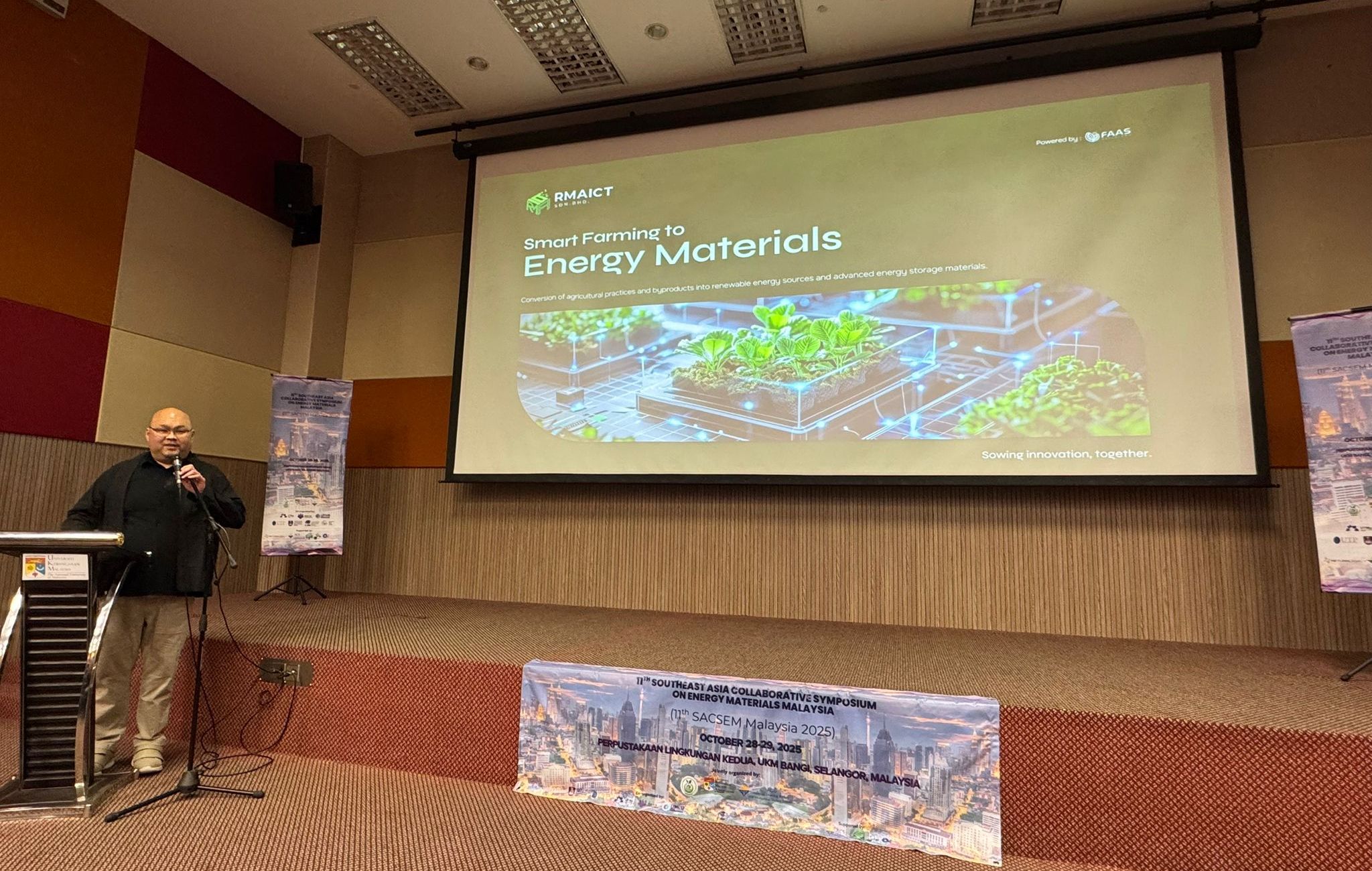
During SACSEM 2025, RMAICT presented a session titled "Smart Farming to Energy Material", exploring the relationship between agricultural technology, energy systems and advanced materials. Modern agriculture increasingly relies on connected technologies to monitor growing conditions, automate routine activities and support better-informed decisions. At the same time, advances in renewable energy and materials science are creating opportunities to rethink how farms use resources and manage agricultural by-products.
Bringing these areas together offers possibilities for developing more integrated agricultural systems. For example, renewable energy technologies can support farming operations, while research into agricultural waste may create opportunities to recover valuable materials. The presentation highlighted how these developments could contribute to greater resource efficiency and long-term sustainability.
Exploring the potential of smart farming and nanotechnology
A central theme of RMAICT's presentation was the relationship between digital agriculture, nanotechnology and renewable energy applications. The session explored several opportunities where these technologies could complement one another.
Turning agricultural waste into valuable materials
Agricultural activities generate organic by-products that may have potential uses beyond conventional disposal. Research into material recovery and processing offers opportunities to transform selected agricultural residues into useful materials, including nanostructured materials for suitable applications.
This approach supports broader circular economy principles by exploring how agricultural resources could be used more efficiently. However, practical applications depend on the characteristics of the materials, processing requirements and their suitability for specific uses.
Applying nanotechnology to agriculture and energy
Nanotechnology is an active research area with potential applications in precision agriculture, environmental monitoring and renewable energy systems. Depending on the materials and application, nanoscale technologies may contribute to improved sensing capabilities, energy storage or other specialized functions.
RMAICT's presentation explored how these research directions could complement connected farming technologies. The wider opportunity lies in connecting advances in materials science with practical agricultural requirements.
Learning from practical technology examples
The presentation also highlighted examples of technologies that demonstrate the potential relationship between farming, energy and digital innovation.
Smart solar dryers can use solar energy to support agricultural drying processes, potentially reducing dependence on conventional energy sources.
Sustainable farm microgrids can combine local energy generation, storage and energy management to support agricultural facilities.
IoT-based irrigation uses connected sensors and control technologies to support more informed water management and irrigation scheduling.
Together, these examples illustrate how different technologies can contribute to more connected and resource-efficient agricultural operations.
Why integration matters for climate-smart agriculture
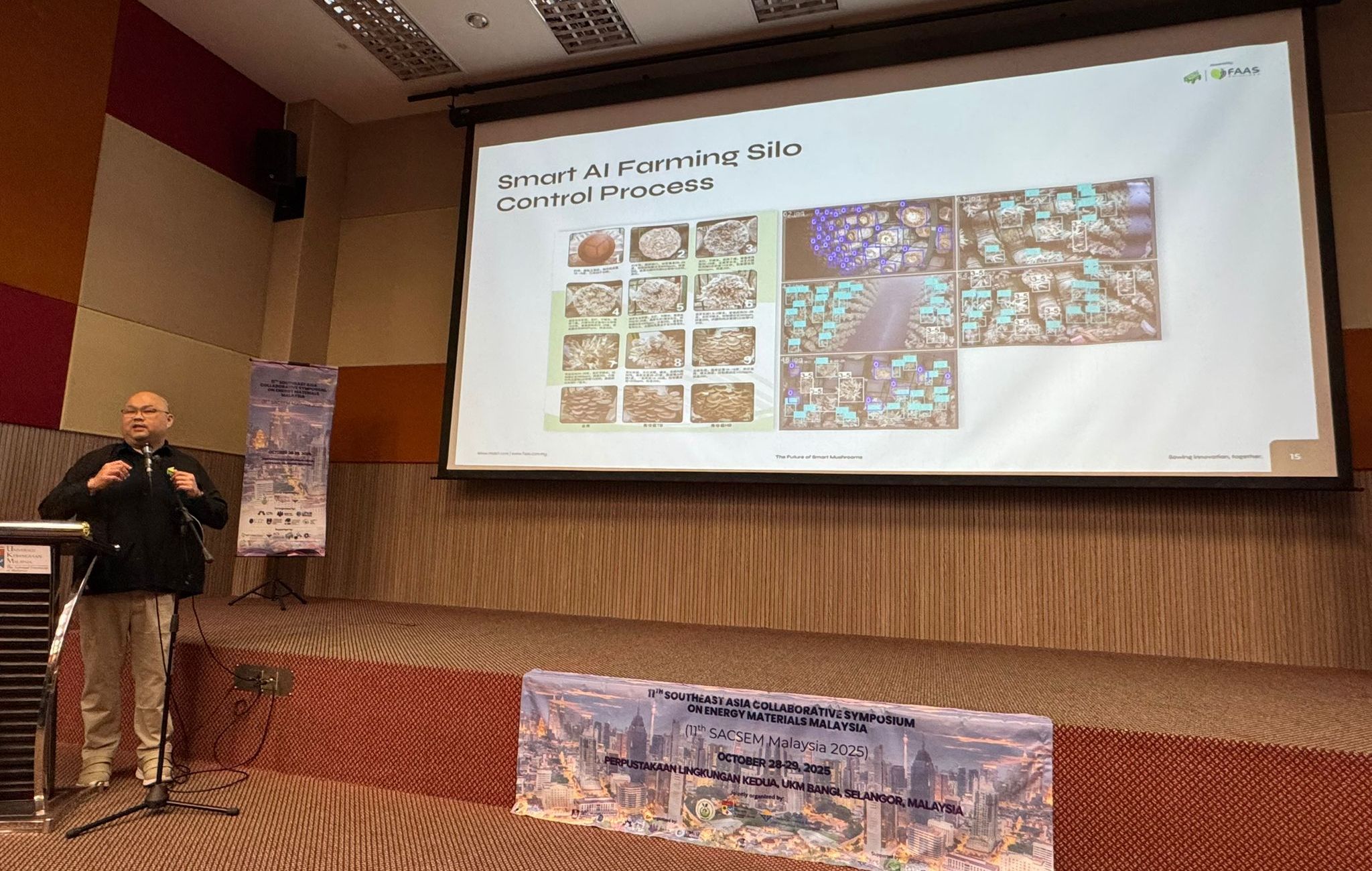
RMAICT presenting the Smart AI Farming Silo control process at SACSEM 2025, illustrating AI-assisted mushroom monitoring.
Climate-smart agriculture focuses on improving agricultural productivity and resilience while supporting environmental sustainability. Digital technologies can contribute to these objectives by helping farmers understand operating conditions, manage resources and respond to changing environmental requirements.
However, individual technologies are often more valuable when they operate as part of a connected system. Combining environmental monitoring, automation, data analytics and renewable energy management creates opportunities for more coordinated agricultural operations.
For example, information collected from farm sensors could support irrigation decisions, while energy monitoring could help operators understand the electricity requirements of automated equipment. RMAICT's presentation emphasized the importance of this integration in developing practical technology-driven agriculture. The discussion also explored broader concepts involving food hubs and coordinated food security initiatives, highlighting how agricultural innovation could contribute to long-term food and energy resilience.
Collaboration between research and industry
SACSEM 2025 provided a platform for connecting research developments with practical industry perspectives. Researchers contribute scientific knowledge and emerging discoveries, while technology practitioners bring experience in system integration, digital implementation and operational requirements.
When these capabilities come together, promising ideas can be evaluated in the context of real-world challenges. For RMAICT, participating in the symposium reinforced the importance of knowledge sharing and multidisciplinary collaboration. Our interest in smart farming extends beyond individual technologies to understanding how digital systems, automation and emerging research can support practical agricultural applications.
Events such as SACSEM create opportunities to exchange ideas, explore new directions and strengthen connections across different fields of expertise.
Advancing sustainable agriculture through innovation
The discussions at SACSEM 2025 highlighted the potential for agriculture, renewable energy and materials science to develop more closely connected solutions. From agricultural waste utilization to smart solar dryers and IoT-enabled irrigation, these examples demonstrate how research and applied technologies can contribute to more sustainable approaches to farming.
At RMAICT, we remain committed to exploring how digital transformation, data and AI can support agricultural innovation. Our participation in SACSEM 2025 reflects this commitment and the importance of connecting technology expertise with research and industry collaboration. As these technologies continue to develop, practical implementation and knowledge sharing will remain essential to realizing their potential.
Explore smart farming and digital innovation with RMAICT. Learn more about our smart farming ecosystem through FaaS Solutions or contact our team to discuss digital transformation and technology-driven agriculture.