


Digital claims management for financial institutions
Digitize the claims journey from first notification to final resolution with connected workflows, structured data and real-time case visibility. Reduce manual handling and give claims teams greater control across every stage.
Connected claims management from intake to resolution
Bring claims intake, assessment, approvals and case management into one connected workflow. We help financial institutions reduce repetitive processing, improve visibility and manage claims with greater consistency.
AI-assisted claims intake and triage
Capture claim information through digital forms and documents, validate key details and use AI-assisted processing to identify missing information, classify cases and support initial triage.
Automated assessment and benefit calculation
Apply configurable rules and calculation logic to support claim assessment, benefit calculation and decision workflows while keeping results traceable for review and approval.
Connected case workflows and audit trails
Route claims through configurable approvals, tasks and escalations while maintaining centralized case records, status visibility, document history and audit trails from submission to resolution.
The pressure to deliver faster, accurate and controlled claims
Claims teams face growing pressure to resolve cases faster while maintaining accuracy, consistency and clear governance. Manual processes, fragmented systems and rising claim volumes can increase administrative effort and make it harder to maintain visibility across the claims journey.
Rising expectations for faster claim resolution
Claimants increasingly expect convenient digital submission, clear status updates and timely resolution. Manual handoffs and inconsistent communication can create delays and reduce confidence in the claims experience.
Manual and fragmented claims processing
Email, spreadsheets, paper documents and repeated data entry can slow intake, assessment and approval while increasing the risk of errors and inconsistent processing.
Limited visibility across claim operations
Disconnected systems make it difficult to understand claim status, workloads, bottlenecks and turnaround times across teams, products and locations.
Complex audit and regulatory requirements
Claims operations require complete records, clear decision histories and controlled handling of sensitive information. Fragmented processes can make traceability and governance more difficult.
Growing claim volumes and product complexity
As institutions introduce new products and channels, claim volumes and processing rules become more complex. Manual workflows can create backlogs and make consistent service harder to maintain.
Measurable outcomes from connected claims operations
Faster claim processing. Connected intake, assessment and workflow automation help reduce delays from submission to resolution.
Less manual handling. Digital forms, automated routing and structured data reduce repetitive processing and rekeying.
Claim visibility. Centralized case information gives teams clearer insight into status, workloads, timelines and exceptions.
Decision traceability. Digital records, approval histories and audit trails provide greater visibility across the full claim lifecycle.
From claim submission to resolution in one connected workflow
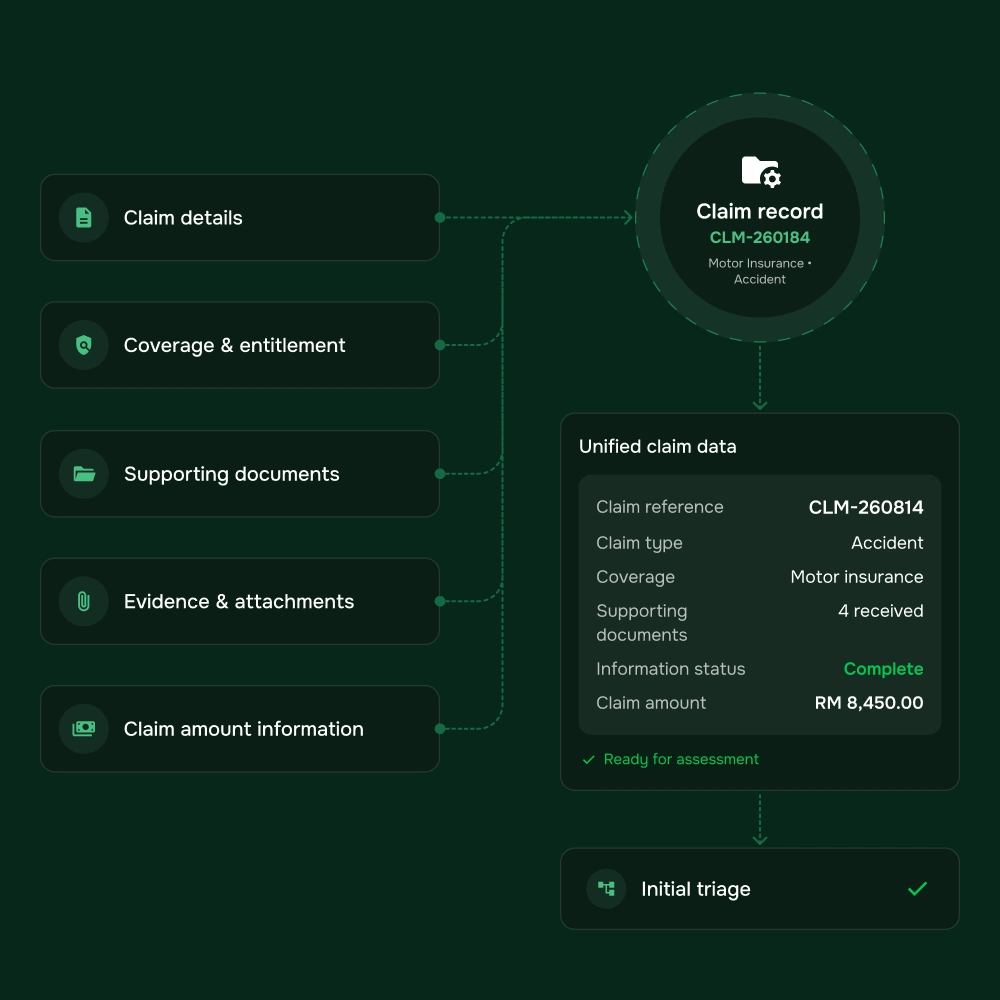
Connect claim intake, assessment, approvals and case management through structured digital workflows. Each stage stays visible from initial submission and document capture through decision-making, communication and final resolution.
Capture complete claim information from the start
Digital claim submission
Allow claimants or service teams to submit claim details through structured digital forms that guide users through the information required for each claim type.
Document and evidence intake
Attach supporting documents, receipts, images and other evidence directly to the claim record so case information stays connected from submission onward.
Data validation and initial triage
Validate required information, identify incomplete submissions and classify claims based on product, claim type and configured business rules.
Turn claim information into consistent, traceable decisions
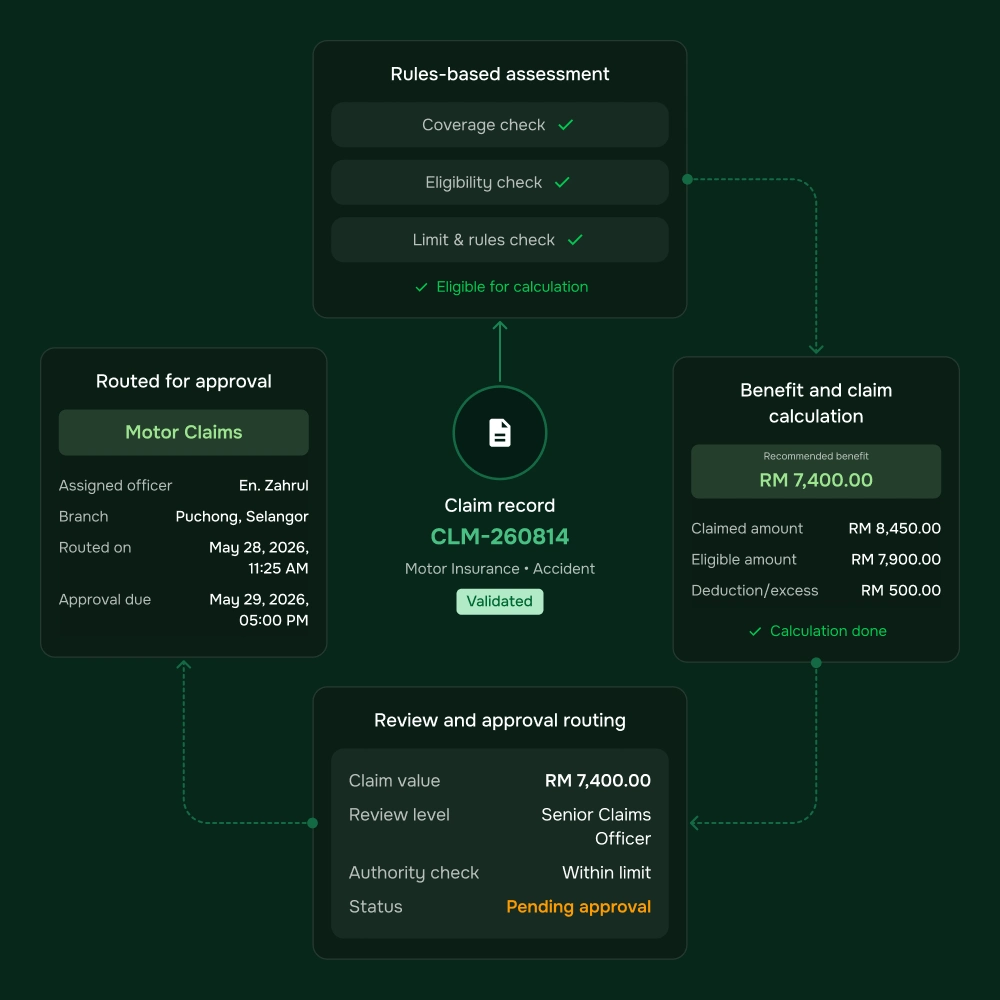
Rules-based assessment
Apply coverage, eligibility and claim rules to support consistent assessment while surfacing cases that require additional review.
Benefit and claim calculation
Use configurable calculation logic to determine eligible amounts, limits or benefits with clear supporting information for reviewers.
Reviews and approval routing
Route cases to the appropriate handler, reviewer or approver based on claim type, value, exception status and authority levels.
Keep claims visible and traceable through to resolution
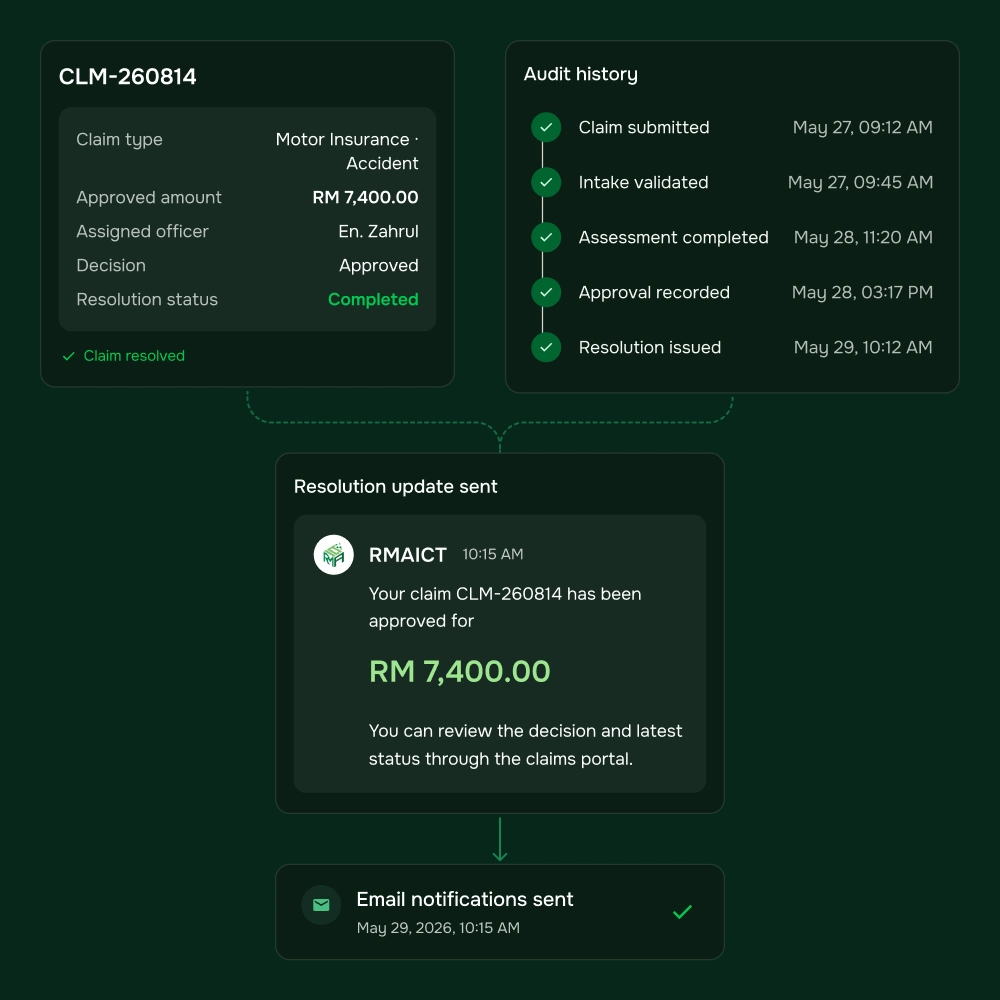
Case status and workload visibility
Give claims teams a connected view of case status, ownership, pending actions and turnaround times across active claims.
Claimant communication and resolution
Coordinate status updates, requests for information and resolution notifications so claimants remain informed throughout the process.
Audit trail and governance
Maintain decision histories, document activity, approvals and case changes to improve traceability and support internal governance requirements.
Frequently asked questions
Common questions about digital claims workflows, system integration, scalability, security and implementation.