


Build smarter manufacturing and supply chain operations
Connect production, inventory, warehouses and logistics through smart manufacturing solutions built to improve visibility, automate operations and strengthen supply chain performance across Malaysia.
Connected solutions for smarter manufacturing and supply chains
Connect production, inventory, warehouse and logistics operations through automation, real-time data and integrated systems. We help manufacturers improve visibility, reduce disruption and coordinate the value chain from factory floor to delivery.
Smart factory automation and predictive operations
Connect production equipment and processes with IoT, automation and predictive monitoring. Improve equipment visibility, reduce unplanned downtime and support more consistent production performance.
Connected supply chain and logistics visibility
Track inventory, warehouse activity and delivery operations with connected systems and real-time data. Improve coordination, identify disruptions earlier and strengthen visibility from source to destination.
Unified manufacturing systems and data
Connect ERP, MES and operational data through integrated platforms that reduce system silos and provide clearer visibility across planning, production and performance.
The pressure to modernize manufacturing and supply chains
Manufacturers face growing pressure to improve productivity, respond faster to demand and operate with greater visibility. Legacy systems, fragmented data, supply chain disruption and manual processes can make it harder to scale efficiently and stay competitive.
Legacy systems that limit operational agility
Aging equipment and disconnected technology can restrict scalability, integration and real-time visibility, making it harder to adopt automation, IoT and advanced analytics.
Disrupted supply chains and limited visibility
Demand changes, logistics delays and fragmented supplier data can make planning reactive. Connected systems and real-time information help teams identify risks earlier and coordinate more effectively.
Fragmented data across operations
Production, inventory, warehouse and logistics data often sit across separate systems. Without a connected view, teams struggle to monitor performance, identify bottlenecks and make timely decisions.
Skills gaps and manual processes
Repetitive tasks and manual coordination reduce productivity and consistency. Automation and connected workflows can help teams focus on higher-value operational work.
Pressure to improve energy and resource efficiency
Manufacturers increasingly need better visibility into energy, materials and equipment usage. Connected monitoring helps identify waste, improve resource efficiency and support sustainability goals.
Measurable outcomes from connected manufacturing and supply chain operations
Faster operational response. Real-time monitoring and connected workflows help teams identify issues and respond more quickly.
Better forecast accuracy. Connected demand, inventory and operational data improve planning and replenishment decisions.
Faster order fulfillment. Integrated warehouse, inventory and logistics workflows help reduce delays from order to delivery.
End-to-end visibility. Connected production, inventory and logistics data provide clearer insight across the value chain.
From production planning to fulfillment in one connected workflow
Connect planning, production, inventory and logistics through real-time data and automated workflows. Each stage stays visible from production readiness to shipment and fulfillment.
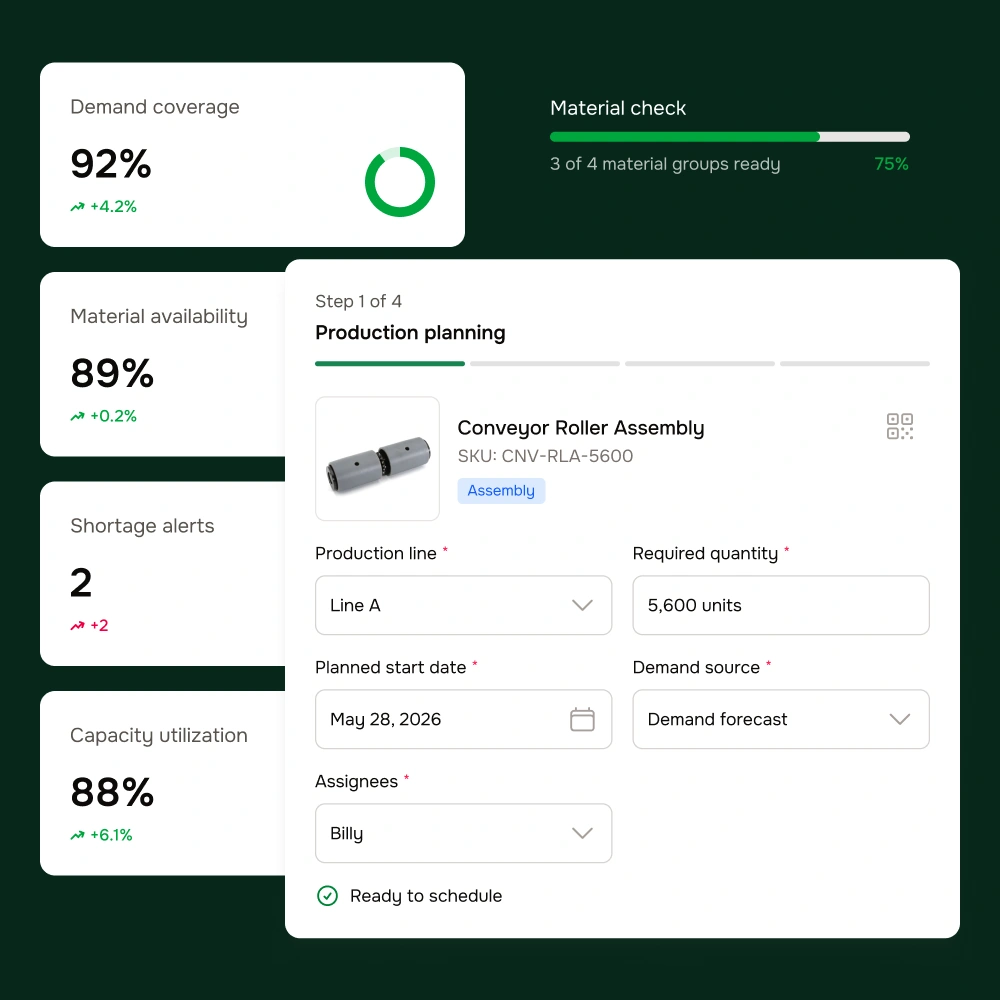
Plan production around demand and material availability
Demand and order visibility
Bring customer orders, forecasts and production demand into a connected view so teams can plan around current requirements.
Material readiness
Check inventory, component availability and procurement needs before production begins to reduce shortages and avoidable delays.
Production scheduling
Coordinate production orders, resources and schedules around capacity and priorities to keep operations aligned.
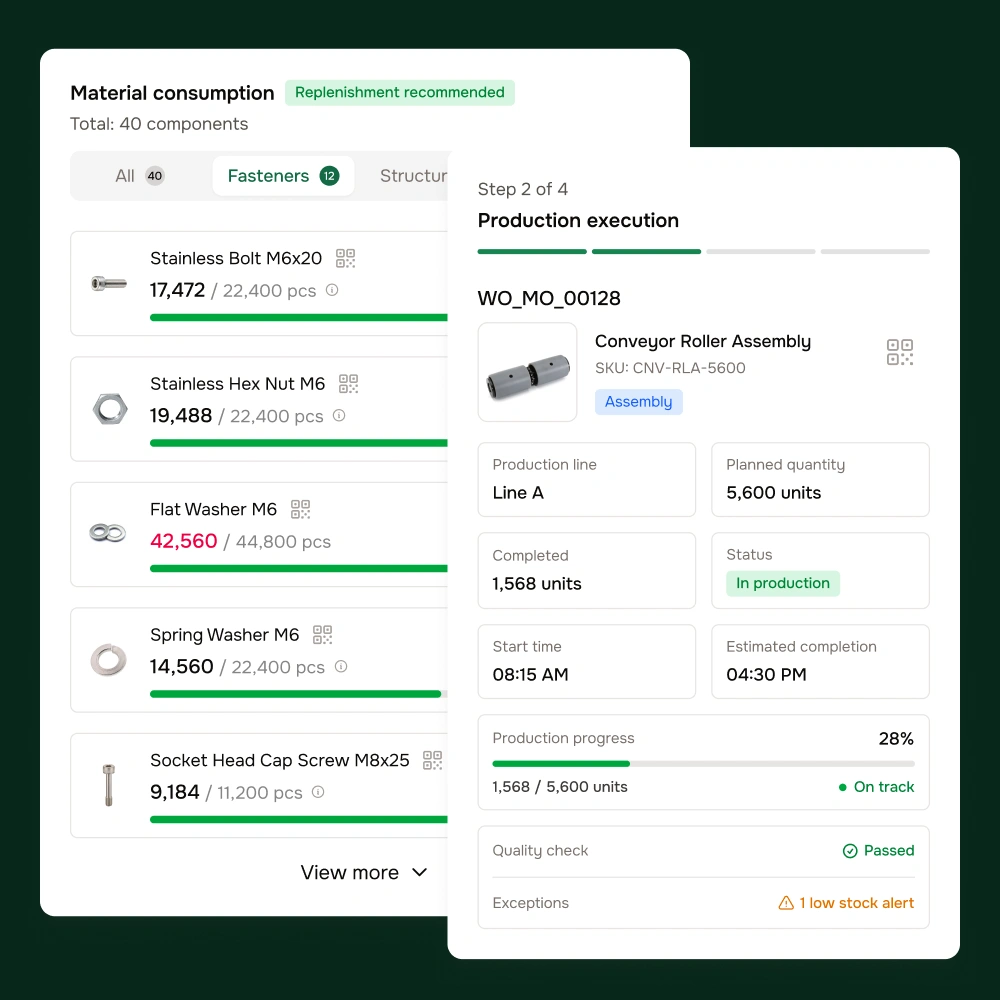
Keep production, inventory and quality connected on the factory floor
Real-time production status
Track active production orders, equipment status and work progress to give teams clearer visibility across manufacturing operations.
Inventory movement and consumption
Record material usage, work-in-progress and finished goods movements as production progresses, keeping stock information connected.
Quality and exception handling
Capture inspections, issues and production exceptions within the workflow so teams can respond earlier and maintain process traceability.
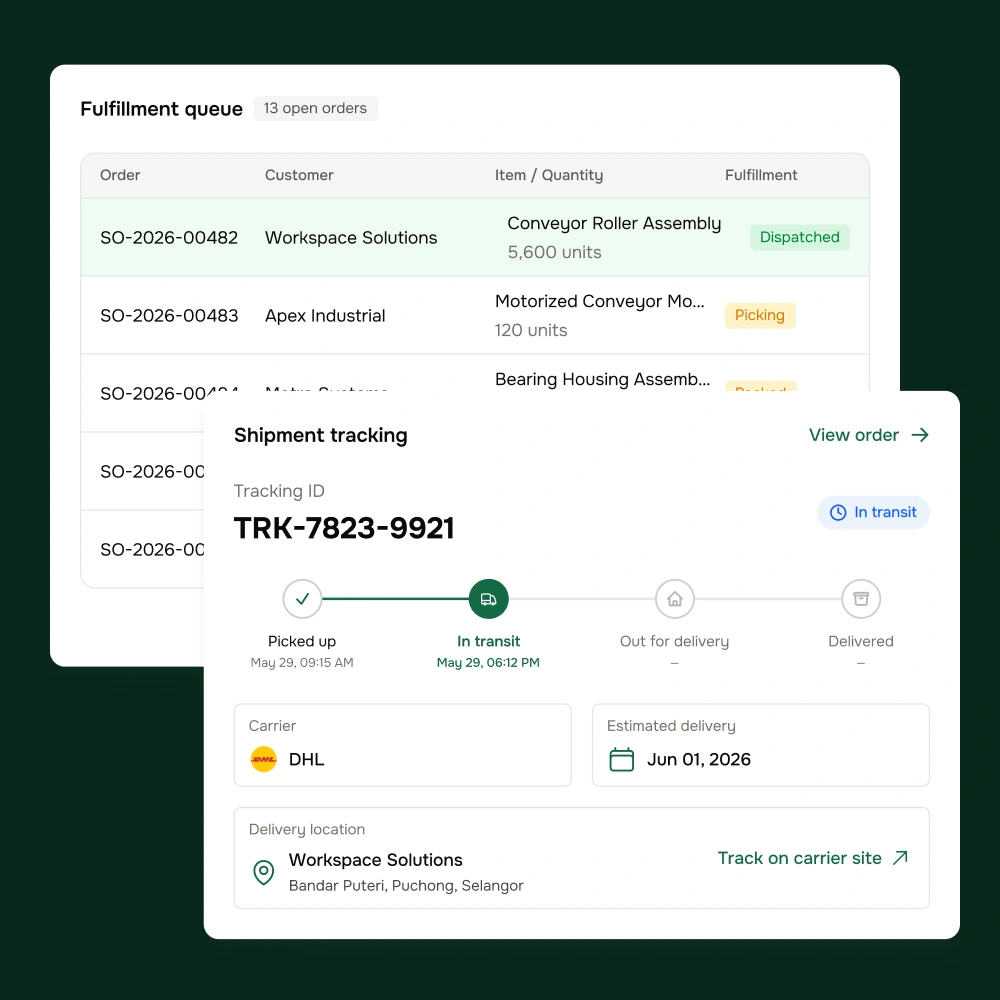
Move finished goods from warehouse to delivery with greater visibility
Warehouse and order fulfillment
Coordinate picking, packing and stock allocation through connected warehouse workflows linked to customer and production orders.
Shipment and delivery coordination
Connect shipment details, carriers and delivery schedules so teams can monitor fulfillment progress and respond to disruptions.
End-to-end operational visibility
Bring production, inventory and logistics status into one connected view for clearer tracking from manufacturing through delivery.
Frequently asked questions
Common questions about smart manufacturing, connected supply chains, Industry 4.0 integration and implementation.