


Manufacturing operations generate valuable information every day. Work orders move through production stages, materials are consumed, equipment performs different tasks, and finished products undergo quality checks. However, having this information does not necessarily mean it is readily available when teams need it.
In many factories, production updates remain scattered across spreadsheets, paper records and disconnected systems. As a result, supervisors may struggle to identify delays, track work in progress or understand how production performance is changing.
Manufacturers cannot consistently improve processes they cannot clearly monitor. This is why shop floor visibility has become an important foundation for modern manufacturing operations.
The hidden cost of invisible operations
Limited manufacturing visibility affects more than reporting. It can influence how quickly teams identify issues, coordinate activities and make operational decisions. Consider a production line where a work order experiences an unexpected delay.
If the production status is not recorded or shared promptly, the issue may remain unnoticed until a supervisor requests an update or reviews the end-of-shift report. By that point, the delay may already have affected subsequent operations, production scheduling or material availability. Similar challenges can occur when quality issues are identified late or when managers cannot determine how much work remains at different production stages.
These gaps create additional administrative work and make it harder for manufacturers to respond proactively. Improving visibility helps reduce uncertainty by making relevant operational information easier to access and understand.
What shop floor visibility should cover
Effective manufacturing visibility involves more than displaying production figures on a dashboard. It requires information that reflects what is happening throughout the manufacturing process, from the release of a work order to the evaluation of production results. Three areas are particularly important.
Work order status and production progress
Work orders provide a foundation for organizing and tracking manufacturing activities. When production information is updated consistently, supervisors can understand which work orders are pending, in progress or completed. This visibility helps teams monitor production progress, identify delays and coordinate activities between different production stages. It also supports more informed planning when manufacturing priorities or customer requirements change.
Work in progress and process traceability
Work-in-progress (WIP) visibility helps manufacturers understand where materials and products are located within the production process. Without reliable tracking, teams may need to contact multiple operators or review different records to establish the status of a particular batch.
Digital production records can provide a clearer view of movement between manufacturing stages. When supported by appropriate identification and tracking methods, these records also strengthen traceability by connecting products or batches with relevant process information. This is especially valuable in manufacturing environments where process accountability and quality requirements are important.
Yield and quality performance
Production visibility should extend beyond tracking completed quantities. Manufacturers also need to understand how effectively production processes convert inputs into acceptable outputs. Yield information, supported by accurate quality records, can help teams identify where production losses or recurring issues occur. For example, comparing quality results across production stages may reveal processes that require further investigation. This information supports more informed discussions about production efficiency, process consistency and continuous improvement.
Why timely production information matters
Manufacturing decisions are often time-sensitive. A production delay, unexpected quality issue or change in material availability may require immediate attention from operators and supervisors. When information is available only through periodic manual reporting, teams may lose valuable time collecting and verifying updates.
Timely shop floor information enables a more responsive approach. Supervisors can review production progress, identify areas requiring attention and coordinate corrective actions based on current information. Managers can also gain a clearer understanding of operational performance without relying entirely on separate reports from different departments.
However, meaningful visibility depends on the accuracy and timeliness of the underlying data. A dashboard can only reflect reliable production conditions when information is captured consistently and updated at an appropriate frequency.
Connecting disconnected manufacturing information
Many factories already use digital tools to support different aspects of production. Manufacturing orders may be managed through an Enterprise Resource Planning (ERP) system, while production updates, quality records and equipment information are maintained separately.
Although each system may serve its intended purpose, disconnected information can limit visibility across the overall manufacturing process. A more connected approach brings relevant production information together to provide a consistent operational picture. For example, linking work order information with production progress and quality records can help teams understand the relationship between planned activities and actual outcomes.
Integration also reduces the need to repeatedly transfer information between systems, where suitable interfaces and data-sharing processes are available. The objective is to make relevant information accessible to the people responsible for managing daily factory operations.
A practical path to better manufacturing visibility
Improving shop floor visibility does not necessarily require manufacturers to introduce every digital capability simultaneously. A phased approach allows businesses to begin with their most immediate operational challenges. For example, a manufacturer experiencing difficulties tracking production progress might prioritize work order monitoring and WIP visibility.
Once these processes are established, the organization can explore additional capabilities such as quality tracking, production analytics and integration with other enterprise systems. This approach allows manufacturers to evaluate how digital tools support actual workflows before expanding their implementation. It also creates opportunities to involve operators and supervisors in defining the information they need. By focusing on operational priorities, businesses can build a more manageable foundation for manufacturing digital transformation.
How FlowTrace supports manufacturing visibility
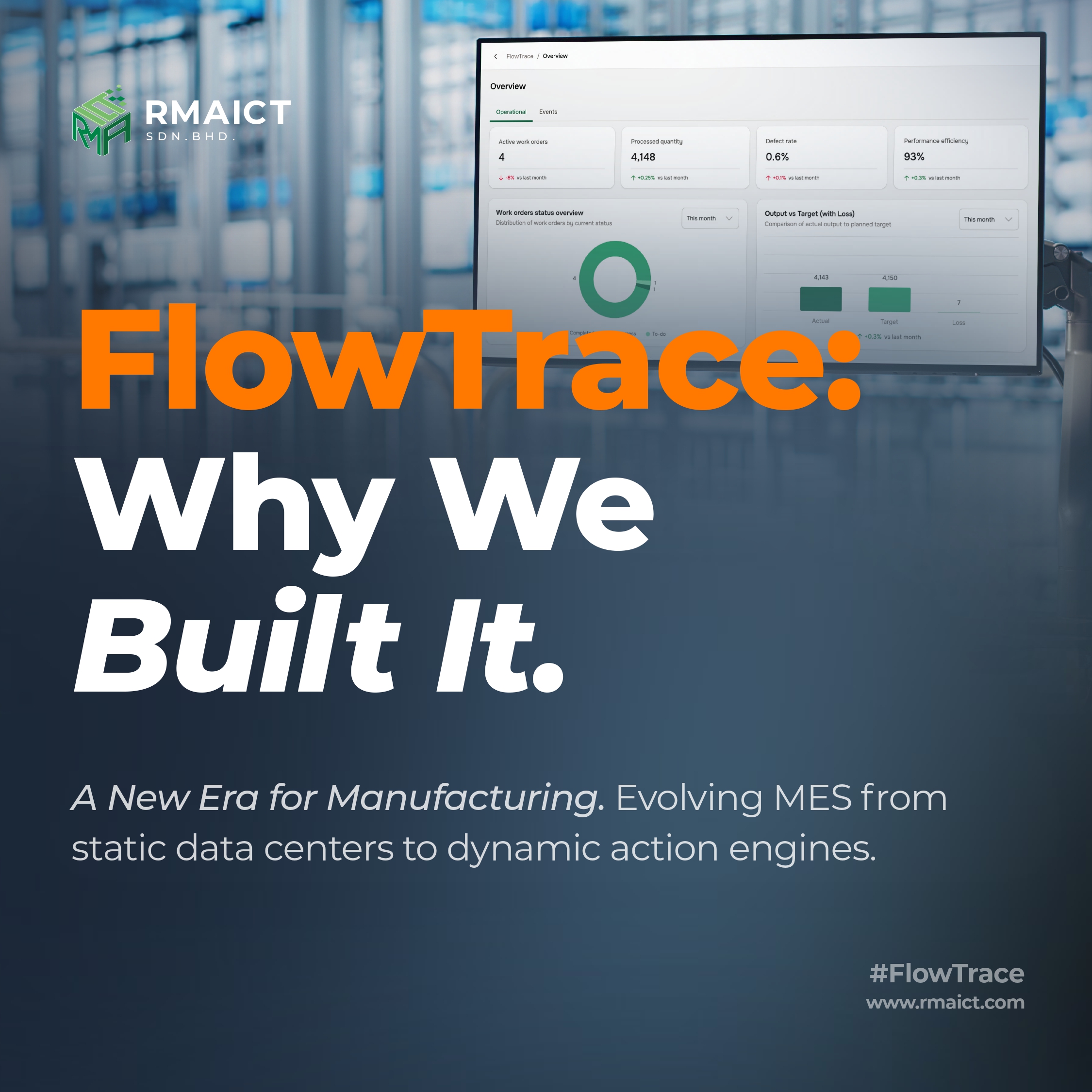
At RMAICT, we recognize the importance of making manufacturing information practical, accessible and relevant to daily operations. Our modular Manufacturing Execution System (MES), FlowTrace, reflects this approach through a focus on production tracking, work-in-progress visibility and process traceability.
FlowTrace is designed to help manufacturers establish clearer production records and improve their understanding of activities across the factory floor. Its modular approach supports the introduction of relevant manufacturing capabilities according to operational requirements.
Rather than treating manufacturing digital transformation as a single large-scale initiative, this approach allows businesses to focus on priority processes and consider progressive improvements. Our goal is to help manufacturers establish a stronger connection between production information, operational workflows and decision-making.
Turning production visibility into continuous improvement
Manufacturing visibility is an important starting point for operational improvement. When teams can understand production status, identify delays and evaluate process performance, they are better equipped to recognize opportunities for change. However, information alone does not guarantee improved results. Manufacturers must also establish appropriate processes for reviewing findings, investigating issues and taking corrective action.
By combining reliable production information with practical operational management, businesses can develop a more structured approach to continuous improvement.
At RMAICT, we aim to support this journey through manufacturing solutions that connect people, processes and technology.
Explore smarter manufacturing with RMAICT. Discover our Manufacturing & Supply Chain Solutions or contact our team to discuss how better production visibility can support your manufacturing operations.