

Manufacturing is evolving rapidly. Customers expect shorter delivery times, production requirements change more frequently, and businesses face increasing pressure to maintain quality while controlling operational costs.
Yet many factories continue to rely on legacy manufacturing systems, disconnected processes and manual reporting methods that were designed for a different operating environment.
These approaches may still support daily production, but their limitations become more apparent as manufacturing requirements evolve. Understanding these challenges is an important first step toward building more responsive and efficient operations.
Why traditional manufacturing approaches face growing pressure
Manufacturing environments have become increasingly dynamic, particularly in industries where product complexity, traceability requirements and production schedules change frequently. Traditional manufacturing systems often operate through established processes that depend on manual coordination or limited integration between departments.
Although these systems may remain functional, they can make it difficult for manufacturers to respond quickly to changing operational needs. For example, production updates may need to be collected from different teams, while adjustments to manufacturing processes can require additional coordination across disconnected systems.
As these challenges accumulate, manufacturers may experience delays in decision-making, reduced operational visibility and greater difficulty adapting to new requirements.
Three challenges holding manufacturers back
The limitations of traditional manufacturing become particularly noticeable when factories need to respond to faster production demands while maintaining operational control. Three challenges deserve closer attention.
Shorter production cycles increase operational pressure
Manufacturers are increasingly expected to respond to changing customer requirements, shorter lead times and more frequent production adjustments. In industries such as semiconductor and electronics manufacturing, these pressures can become particularly significant because production processes involve multiple stages and strict quality requirements.
When production schedules change, teams need accurate information to coordinate materials, equipment and workforce activities. However, traditional processes may rely on manual updates or communication between departments, making it difficult to respond consistently.
Without timely production information, manufacturers can struggle to identify delays, adjust priorities and maintain coordination across the factory floor.Improving production visibility and information sharing can help teams respond to these changes more effectively.
Disconnected systems limit operational visibility
Many manufacturers operate with information distributed across spreadsheets, standalone applications and legacy production systems. Although individual systems may perform their intended functions, limited integration can make it difficult to obtain a consistent view of manufacturing operations.
For example, production progress may be tracked separately from quality records, while work-in-progress (WIP) information requires manual updates. This fragmentation creates additional work for operators and supervisors who need to collect, verify and consolidate information. It can also affect production traceability, particularly when manufacturers need to understand the movement of materials or identify where an issue occurred during production.
Connecting relevant production information helps establish a more reliable foundation for monitoring operations, improving traceability and supporting informed decisions.
Lengthy MES implementations delay operational improvements
A Manufacturing Execution System (MES) can help manufacturers manage production activities, improve traceability and gain better visibility into shop floor operations. However, implementing an MES can be challenging when the project involves extensive customization, complicated integrations or significant changes to existing workflows.
Traditional implementation approaches may require substantial planning and configuration before manufacturers can begin using the system in daily operations. For businesses with evolving production requirements, this can delay the realization of operational benefits. Implementation complexity may also create challenges for employees who need to adapt to unfamiliar systems and processes.
A more flexible approach allows manufacturers to prioritize essential capabilities, introduce improvements progressively and expand their systems as operational requirements evolve.
How these challenges affect manufacturing performance
Although these challenges arise from different aspects of factory operations, they are closely connected. Shorter production cycles increase the need for timely information. Disconnected systems make that information harder to access. Lengthy system implementations can delay efforts to improve these processes.
Together, these limitations can affect how effectively manufacturers coordinate production, respond to operational issues and plan improvements. For example, when supervisors cannot obtain reliable work-in-progress information, identifying production bottlenecks may require additional manual investigation. Similarly, limited traceability can make it more difficult to understand process deviations or investigate quality-related issues.
These challenges demonstrate why manufacturing modernization should address both operational processes and the technologies supporting them.
A more practical approach to manufacturing modernization
Addressing manufacturing challenges does not necessarily require replacing every existing system at once. Instead, manufacturers can begin by identifying the processes where better visibility, coordination or traceability would provide the greatest operational value. A phased approach allows businesses to introduce essential digital capabilities while considering existing workflows and technical requirements.
For example, a manufacturer might begin by improving production tracking before expanding into additional areas such as quality management, analytics or deeper system integration. This approach also creates opportunities to involve operators and supervisors throughout the implementation process, ensuring new technologies reflect practical shop floor requirements.
By focusing on clear operational priorities, manufacturers can develop a more manageable roadmap for digital transformation.
Supporting flexible manufacturing with FlowTrace
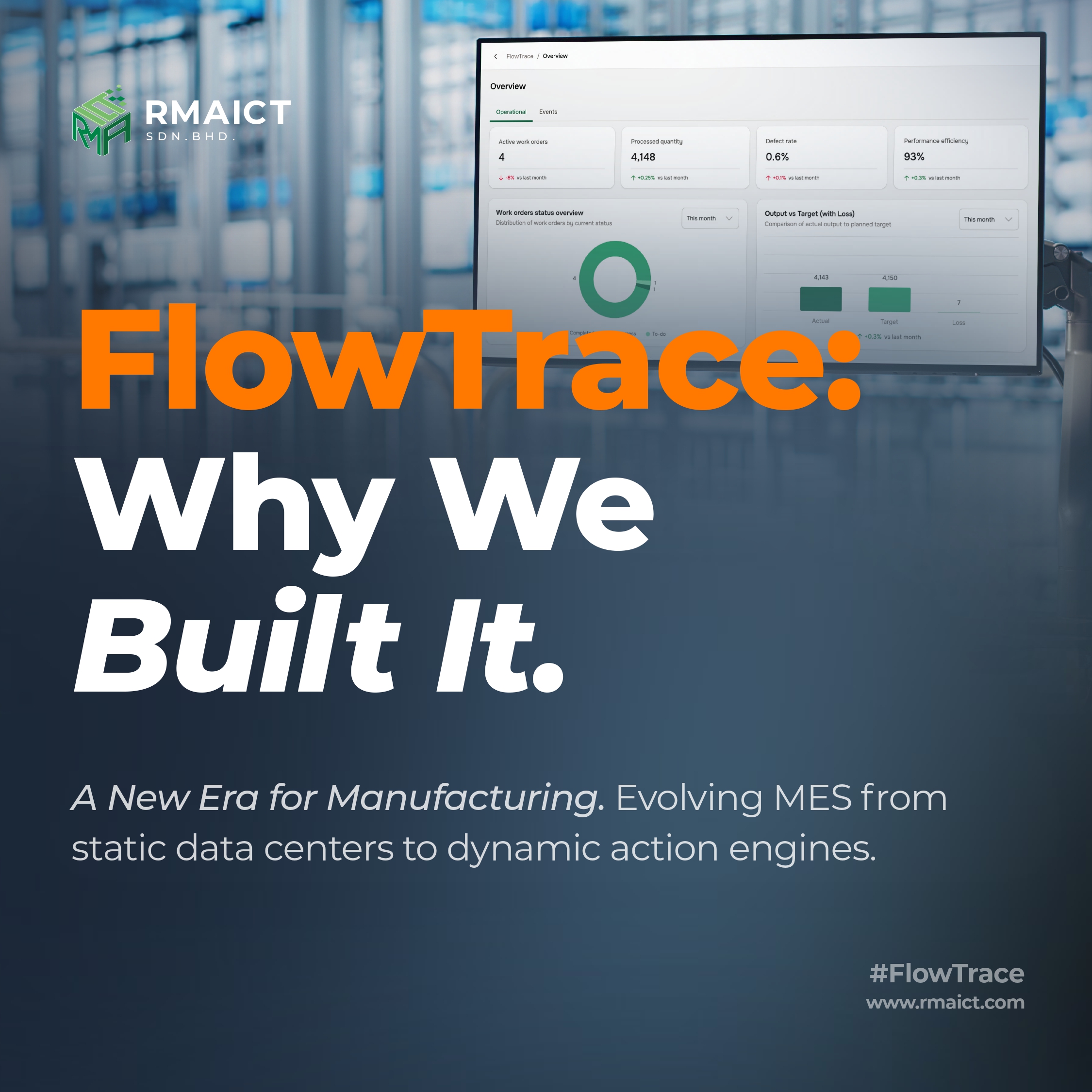
At RMAICT, we recognize the importance of building manufacturing technology around real operational needs. Our modular Manufacturing Execution System, FlowTrace, reflects this approach by focusing on practical production management capabilities and adaptability.
FlowTrace is designed to support production tracking, work-in-progress visibility and process traceability through a modular approach. Rather than requiring manufacturers to introduce every capability simultaneously, its design emphasizes the ability to focus on relevant operational requirements and expand progressively.
This provides a direction for manufacturers seeking to modernize their production processes while managing implementation complexity. Our broader objective is to make manufacturing digital transformation more approachable through solutions that support the people, processes and information behind factory operations.
Building factories that can adapt to change
Manufacturing requirements will continue to evolve as customer expectations, production technologies and industry standards change. Businesses that rely on disconnected information and inflexible processes may find it increasingly difficult to respond efficiently.
Recognizing these challenges allows manufacturers to identify where practical digital improvements can make a difference. By strengthening production visibility, improving coordination and adopting more adaptable systems, manufacturers can build a foundation for more responsive and connected operations.
At RMAICT, we aim to support this transformation through manufacturing solutions designed around practical business needs.
Explore smarter manufacturing with RMAICT. Discover our Manufacturing & Supply Chain Solutions or contact our team to discuss your manufacturing challenges and modernization priorities.